
If you've asked "is B2B packaging exempt from EPR?" and received a different answer every time, you're not alone. It's one of the most common and misunderstood questions we hear from producers navigating packaging Extended Producer Responsibility (EPR) laws. The short answer: there is no blanket B2B exemption. The real answer is longer, and it depends entirely on which state your packaging reaches.
This guide breaks down exactly how each of the seven states with packaging EPR laws, including Oregon, Colorado, California, Minnesota, Maryland, Washington, and Maine (program not yet implemented), treats business-to-business, secondary, and tertiary transport packaging, plus a chart you can reference at a glance.
This post is for general informational purposes and isn't legal advice. Exemption rules are detailed and state guidance is still evolving in several states. Confirm your specific obligations with CAA or your state's environmental agency, or talk to our compliance team.
What Counts as "B2B" or "Transport" Packaging Under EPR?
Before diving into state rules, it's worth clarifying terms because "B2B packaging" gets used loosely, and that looseness is where confusion creeps in.
EPR laws generally classify packaging into three tiers:
- Primary packaging: the packaging that directly contains the product and that an end consumer interacts with (a shampoo bottle, a snack bag).
- Secondary packaging: packaging that groups primary units together, often for retail or distribution (a case of 12 bottles).
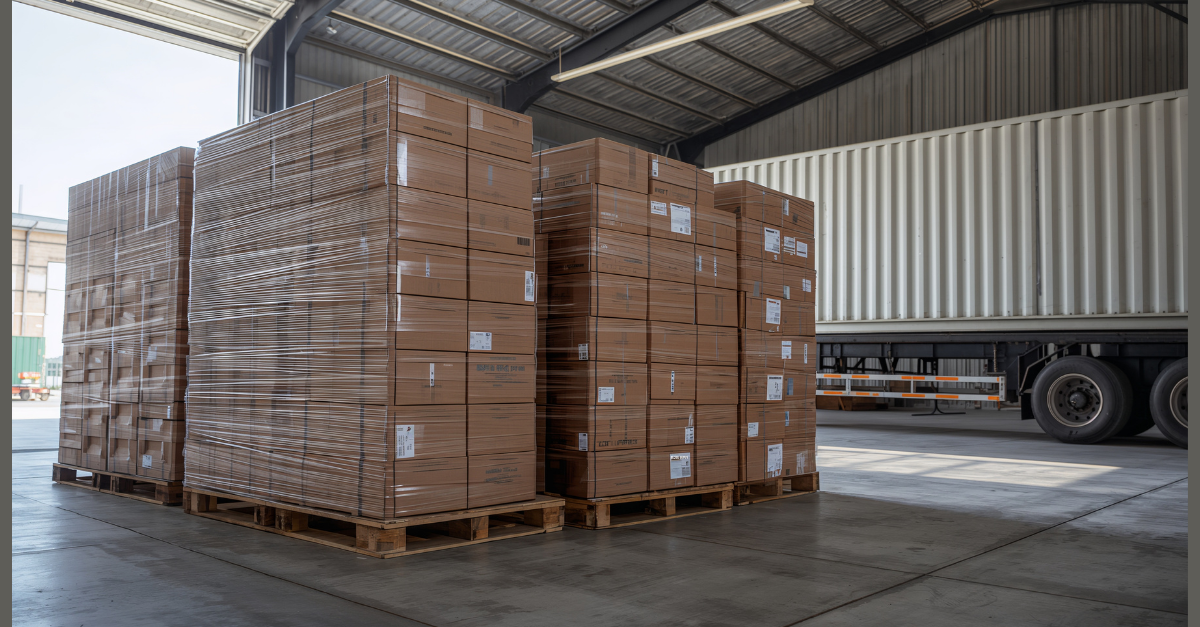
- Tertiary or transport packaging: packaging used to move goods through the supply chain and typically never seen by the end consumer: pallets, shrink wrap, pallet wrap, corrugated shipping cases, and similar bulk-shipping materials.
When companies ask whether B2B packaging is exempt from EPR, what they usually mean is: is tertiary/transport packaging (used to ship products between businesses) exempt?
The Short Answer: It Depends, State by State
There is no blanket B2B exemption. Most state EPR laws cover B2B, secondary, and tertiary packaging.
That said, real exemptions do exist – with nuance. They're narrower and more specific than a general "B2B" carve-out. Think "packaging used exclusively in an industrial process" or "rigid pallets," not "any packaging sold business-to-business." A few states (Colorado, most notably) have taken a broader exclusionary approach, which is exactly why a state-by-state check is necessary before you assume you're in the clear.
Colorado is the outlier with a broad B2B exclusion. Every other state either covers B2B/transport packaging outright (California, Oregon with narrow exemptions) or hasn't finalized clear guidance yet (Maine, Minnesota). If you’re confused by the fragmented state of B2B EPR, you’re not alone. We’re here to help. Reach out to our team if you want to assess your obligations.
Common Misconception: De Minimis ≠ B2B Exemption
One mix-up we see constantly: confusing a de minimis (small business) exemption with a B2B exemption. These are unrelated concepts that both result in "you might not owe fees," which is why they get conflated.
See our breakdown of de minimis (small business) exemptions in this 2026 EPR guide.
- A de minimis exemption is based on your company's size; typically annual revenue and/or the tonnage of packaging you place into a state.
- A B2B exemption (where it exists) is based on the type and use of the packaging itself, regardless of your company's size.
A few known de minimis thresholds, where currently confirmed:
- Maryland: exempt if under 1 ton of covered packaging or under $2 million in global revenue
- Washington: exempt if under 1 ton or under $5 million in global revenue (or a qualifying agricultural employer under a separate threshold)
- California: exempt if gross sales in the state for the most recent calendar year is under $1 million
If you're a small producer, check the de minimis thresholds for each state you sell into. If you're a large producer shipping primarily B2B, check the B2B-specific rules instead. Being small doesn't make your transport packaging exempt, and shipping B2B doesn't make you a small producer.
What This Means If You're a Contract Manufacturer, Co-Packer, or Supplier
If you manufacture goods under someone else's brand, here's the good news: you're typically not the "producer" under EPR law, the brand owner named on the package is. Contract manufacturers and co-packers generally aren't the obligated party for reporting or fees.
That said, this is a general rule, not a guarantee. A few states define "producer" differently depending on the sales arrangement, and contractual terms between you and the brand owner can shift who's actually obligated. Confirm your specific status with the CAA or your own legal counsel before assuming you're exempt from reporting.
Additionally, that doesn't mean you're off the hook entirely. Brand owners need accurate material, weight, and packaging data to file their own reports, which means suppliers and converters are often asked to provide detailed bills of materials, component weights, and recyclability data even though they're not the ones filing.
So it's worth having that data organized proactively, ready to hand off whenever your customer requests it.
What to Do If You're Unsure Whether Your Packaging Is Covered
If you're not 100% sure where your packaging falls, here's a practical way to work through it:
- Classify the packaging. Is it primary, secondary, or tertiary? Be specific because "shipping materials" can span all different categories depending on what it's protecting and how.
- Check each state's covered-material definition directly, not just whether your industry has a general reputation for exemption. Definitions vary meaningfully state to state, as the chart above shows.
- Confirm your producer status. Are you the brand owner, manufacturer, importer, or distributor? If you're a contract manufacturer, the obligation likely sits with your customer. Be prepared to provide packaging data anyway.
- When genuinely uncertain, report it. Across nearly every state's enforcement framework, under-reporting carries meaningfully more risk than over-reporting. If a packaging category is ambiguous, err toward inclusion while you seek clarification.
- Let rePurpose handle it. rePurpose’s Compliance platform maps your packaging portfolio against each state's current covered-material and exemption rules directly, so you can get a specific answer tailored to your business.
FAQ
Is B2B packaging exempt from EPR laws?
Not automatically, and not in most states. Whether your business customer is another company or an end consumer generally doesn't change whether the packaging is covered. What matters is the packaging's classification (primary, secondary, or tertiary) and each state's specific covered-material definition. Colorado is the clearest exception, with a broad exclusion for most B2B packaging.
What is tertiary packaging, and is it covered under EPR?
Tertiary (or transport) packaging is packaging used to move goods through the supply chain — pallets, shrink wrap, and bulk shipping cases — that the end consumer doesn’t see. It's explicitly covered under Oregon's and California's laws (with narrow exemptions in Oregon for specialty industrial packaging and rigid pallets), and generally covered in Minnesota, Maryland, and Washington. Colorado is the main state that broadly excludes it.
Does Colorado exempt B2B packaging?
Largely, yes. Colorado excludes most business-to-business packaging from its program, making it the most permissive of the seven EPR states on this specific question. This is state-specific, though — the same packaging could still be fully covered if it also reaches other states like California or Oregon.
Is shipping or transport packaging (pallets, shrink wrap) covered under California's SB 54?
Yes. California's SB 54 does not include a B2B exemption, and it explicitly names tertiary packaging used for bulk packaging and wholesale shipping as covered material.
What's the difference between a B2B exemption and a de minimis exemption?
A B2B exemption (where one exists) is based on the type and use of the packaging itself. A de minimis exemption is based on your company's size — typically total revenue or the tonnage of packaging you place into a state — regardless of who your customers are. A small producer shipping consumer packaging and a large producer shipping only B2B transport packaging could land on opposite sides of these two very different exemption types.
If you want a definitive answer rather than general guidance, speak with one of our compliance experts to help map your exact obligations across all active EPR states in one place.
Related posts


.avif)

.jpg)